RSO Quality Standard – Rick Simpson Oil Store
Quality standard here is a set of stated standards you can check, not a slogan. The oil is a whole-plant ethanol extract, winterised, triple-filtered and decarboxylated, verified against a third-party certificate of analysis. This page sets out the method, what is tested, how each format is packaged and stored, and how to verify the product you received. Where a standard cannot be evidenced, we say so rather than claim it.
What Quality Standard Means Here
Our RSO quality standard means the product matches its stated specification: the right extract, the right fill, the right label, and a certificate that describes the batch you actually received. It does not mean "premium", "medical-grade" or "pharmaceutical" — those are words, not standards, and none of them is used on this site.
Three things a buyer can check, and the page is organised around them. The specification is stated on every product page: fill weight, shell or barrel, milligrams per unit. The certificate describes the batch and is available on request. The batch number on the product ties the two together. If any of the three is missing, that is a quality failure you can act on.
Extraction and Manufacturing Standards
The oil is made the same way for every format on this site — syringes, capsules and suppositories all carry the same extract:
Whole-plant wash. The plant material is washed with 200-proof food-grade ethanol under cold-controlled conditions, so the extract carries the full plant profile rather than an isolated fraction.
Winterised and triple-filtered. Waxes and lipids are removed by winterisation, and the extract passes through three filtration stages. The result is a thick, dark, unrefined oil — not a distillate, and nothing has been isolated out of it.
Decarboxylated at about 110 °C for 30–45 minutes. This activates the cannabinoids. The reference certificate reads THCa as not detected, which confirms the step finished: the potency figure describes the oil as it behaves, not as a potential that still needs heat.
Nothing added. No carrier oils, diluents, excipients or added terpenes in the oil. A capsule holds pure RSO in the shell; a suppository holds RSO plus a moulding base, and the base is disclosed on the product label.
What We Test (and What We Do Not)
Potency — tested and published. The reference batch (sample 179973U066) is verified by third-party certificate at 67.57% Δ9-THC, 0.57% CBD, 1.24% CBN and 69.39% total active cannabinoids. The full results are on the lab testing and COA page.
Contaminant panels — available on request. Pesticides, heavy metals, mycotoxins and microbiologicals are screened, and the panels for current lots are provided when you ask with your batch number. They are not published here because the full panel set for the reference batch was not supplied with this build.
Terpene panel — available on request. Full-spectrum RSO of this type typically carries terpenes at roughly 1.5–3%, stated as a category range until the panel for your lot replaces it with a measured value.
Residual ethanol — not tested. The extraction solvent is food-grade ethanol and it was not tested for residual levels. We therefore make no "purged below residual-solvent limits" claim — that would require a test that was not run.
Finished units — not covered by the oil's certificate. The COA verifies the extract before it is filled into a capsule or moulded into a suppository. Finished-unit potency, base uniformity and fill-weight accuracy are separate manufacturing checks, and no certificate here claims them.
Packaging and Storage Standards
Each format has a different packaging standard, because each fails differently:
Syringes are clear borosilicate glass with a black rubber plunger, a ribbed screw-on Luer-Lock cap and white graduations, supplied without needles. Glass protects from light; the sealed cap limits oxygen. Store upright, sealed, dark and cool.
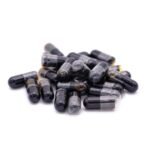
Capsules are size 00 shells — gelatin or HPMC (vegetarian) depending on the batch — in a light-protective bottle, often with a desiccant. The shell is a moisture barrier, so capsules are stored below 25 °C, dry and dark, and never refrigerated: condensation is precisely what the shell cannot tolerate.
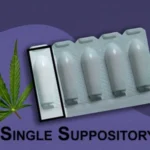
Suppositories are moulded units, individually wrapped, and shipped insulated. The base melts at body temperature, so this is a cold-chain product: refrigerate at 2–8 °C from arrival, never freeze, and discard any unit that arrives deformed. The storage guidance for all three formats is in how to store RSO.
How to Verify a Product
Four checks, in order:
Check the batch number printed on the product. It is the link between the product in your hand and the certificate that describes it.
Request the panel for your lot. Contact support with the batch number. The potency panel for the reference batch is published on the lab testing and COA page; contaminant and terpene panels for current lots are provided on request.
Check the specification on the product page: fill weight, shell or barrel size, and milligrams per unit. If the specification is not stated, the product cannot be verified — which is why every product page here states it.
Weigh-check the fill. Three filled capsules read 1.84–1.94 g on a 0.01 g scale (0.5 g of oil plus a size 00 shell). A suppository is an approximately 2 g moulded unit containing 1 g of RSO. If your product does not match its specification, contact support before using it.
What We Do Not Claim
The claims below are common in this niche. None of them appears on this site, and the reason is stated for each:
Not "medical-grade". There is no regulated standard by that name for this product. We state the method, the tests and the results instead.
Not "purged below residual-solvent limits". Ethanol was not tested for residuals. The claim would require a test that was not run.
Not "pesticide-free". The pesticide panel is available on request for current lots. A panel on request is not a blanket result, and we do not present it as one.
Not "full-panel tested". Testing is scoped to what was actually run. The word "full" would imply a completeness we do not have.
Not a treatment for anything. These products have not been evaluated or approved by the FDA, EMA or MHRA for any condition. The National Cancer Institute and NIH NCCIH describe an evidence base of laboratory and animal work with no controlled human trials of whole-plant RSO in disease. A certificate describes what is in the oil, not what the oil does.
Frequently Asked Questions
What quality standards does this store follow?
The oil is a whole-plant ethanol extract, winterised, triple-filtered and decarboxylated at about 110 °C, with no carrier oils or added terpenes. Potency is verified by third-party certificate (67.57% Δ9-THC), contaminant and terpene panels are available on request, and every product page states its fill weight, shell or barrel, and milligrams per unit.
How is the RSO extracted?
Whole-plant material is washed with 200-proof food-grade ethanol under cold-controlled conditions, then winterised and triple-filtered, and decarboxylated at about 110 °C for 30–45 minutes. The reference certificate reads THCa as not detected, confirming the activation step finished.
Is the oil tested?
Potency is tested and published: the reference batch (sample 179973U066) reads 67.57% Δ9-THC and 69.39% total active cannabinoids. Contaminant and terpene panels are available on request for current lots. Residual ethanol was not tested, so no residual-solvent claim is made.
Why is there no "medical-grade" claim?
There is no regulated standard by that name for this product. Rather than use a word that sounds like a certification, this site states the method, the tests that were run, and the results — which is the information a buyer can actually check.
How do I verify the product I received?
Check the batch number on the product, request the panel for your lot from support, and compare the fill against the specification on the product page. Three filled capsules read 1.84–1.94 g on a 0.01 g scale; a suppository is an approximately 2 g unit containing 1 g of RSO.
Are capsules and suppositories tested as finished units?
No. The certificate verifies the oil before it is filled or moulded. Finished-unit potency, base uniformity and fill-weight accuracy are separate manufacturing checks, and no certificate here claims them. If a listing implies its finished units were potency-tested, ask to see that report.
Can this RSO be shipped to where I live?
That depends on your jurisdiction: licensed sale only, and federal and carrier rules govern cannabis products crossing borders. See shipping and delivery eligibility for the detail; checkout confirms whether we can supply you.
Related Pages
Trust: lab testing and COA information
Formats: RSO syringes · RSO capsules · RSO suppositories
Learn: what is RSO · how to choose RSO · how to store RSO · RSO side effects
Shop: RSO price guide · contact support
Further reading: FDA: cannabis and cannabis-derived products · Wang et al., 2016



 RSO Syringes
 RSO Capsules
 RSO Suppositories